
Cast Iron Sewer Lines
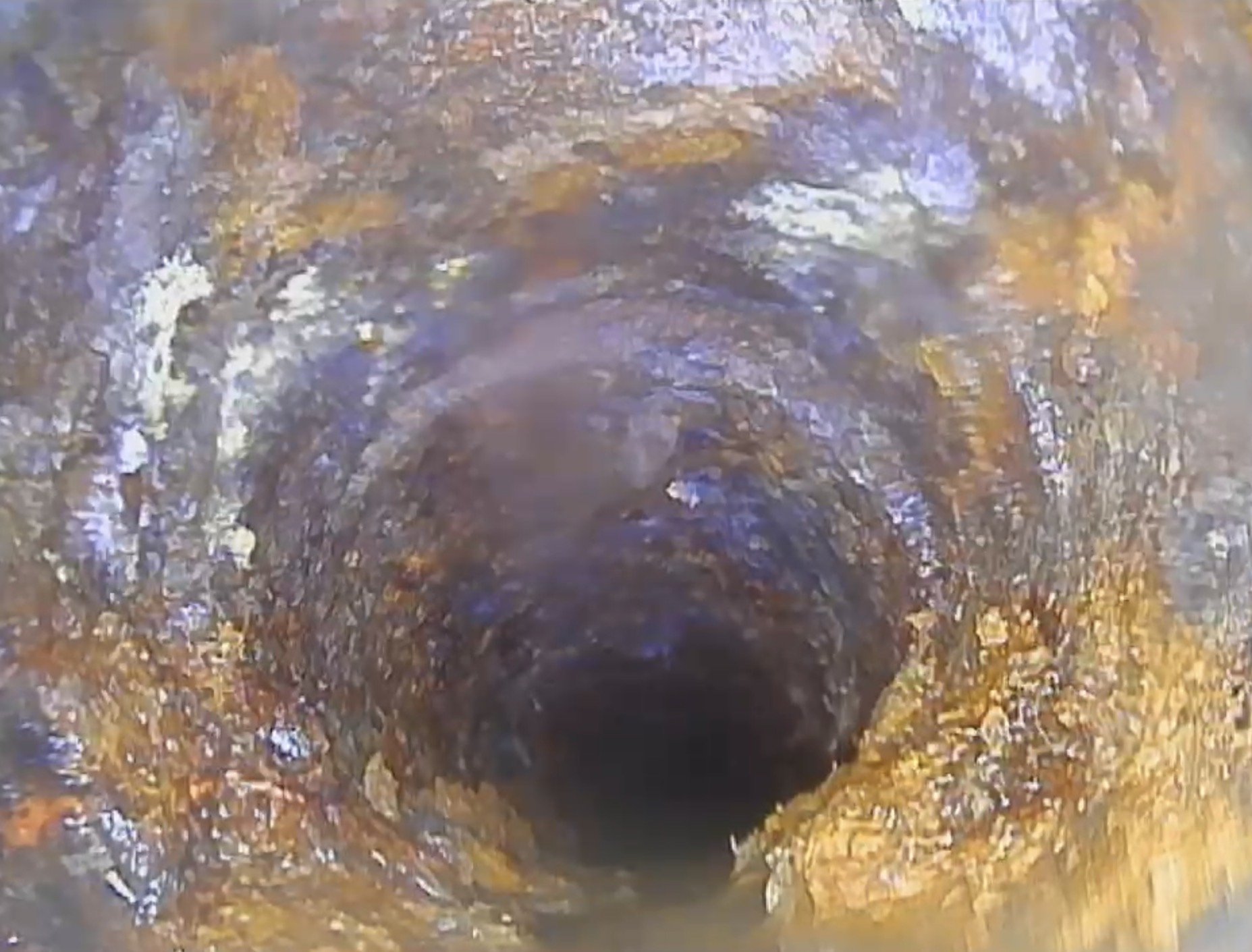
Heavy scale/rust
Cast iron sewer lines were commonly installed in homes built prior to the 1970s and can still be found in many properties today. While cast iron is strong and durable, it naturally deteriorates over time. Unlike PVC, cast iron is susceptible to rust, scaling, and corrosion from constant exposure to wastewater and moisture.
As cast iron ages, the interior walls begin to develop heavy scale buildup. This rough, flaky corrosion narrows the inside diameter of the pipe, which can restrict flow and create areas where debris, paper, and waste catch more easily. Over time, corrosion can also lead to cracks, channeling in the bottom of the pipe, or even structural failure.
Because these issues develop gradually and out of sight, many homeowners are unaware there is a problem until backups or slow drains occur. A sewer scope inspection allows the line to be visually evaluated from the inside. This helps identify scale buildup, separations, low spots holding water, cracks, or other defects before they turn into costly repairs.
If your home has cast iron plumbing — or you’re purchasing a home that does — a sewer inspection provides valuable insight into the condition of the line and helps you plan for maintenance or future replacement if needed.
